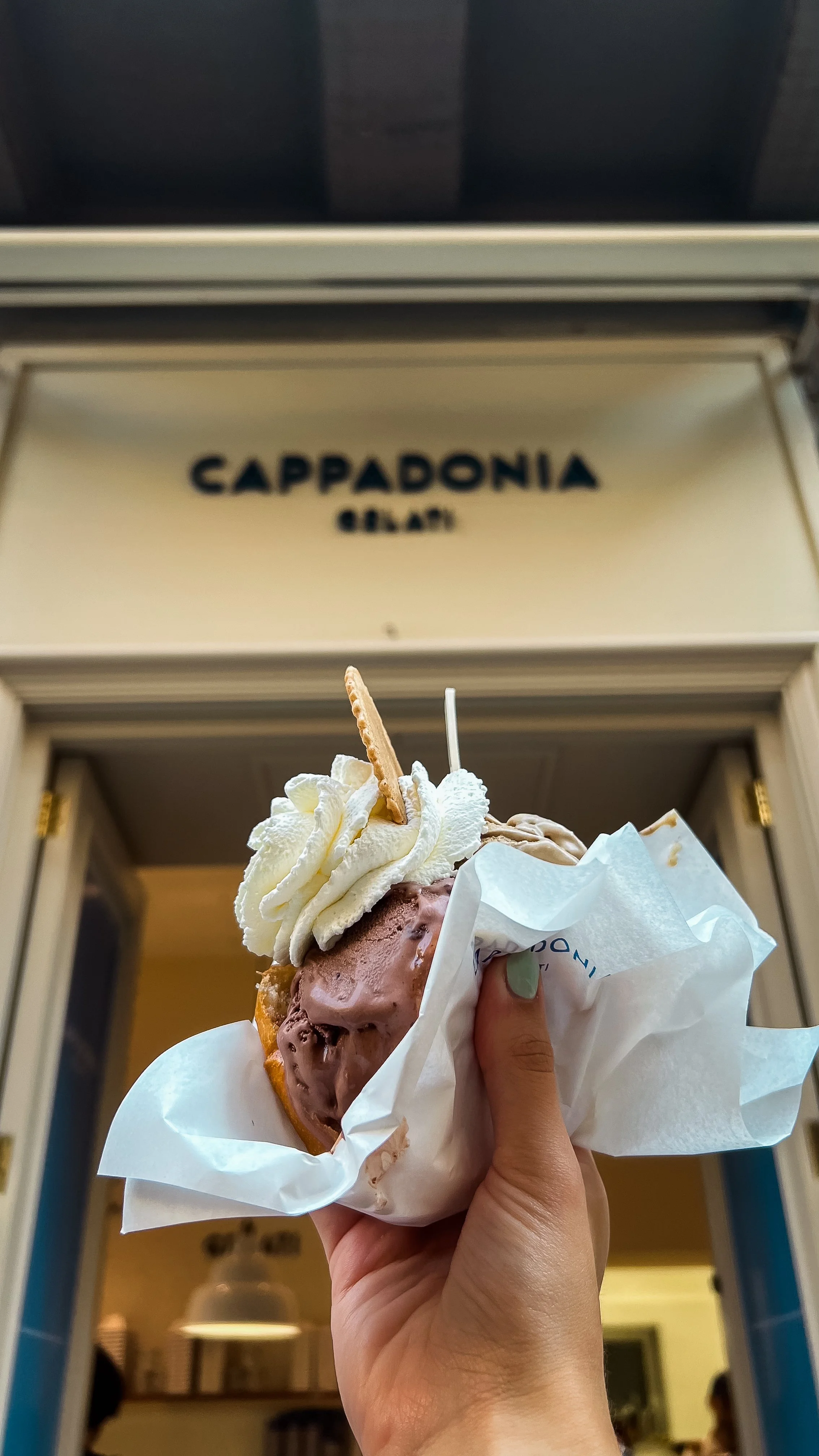
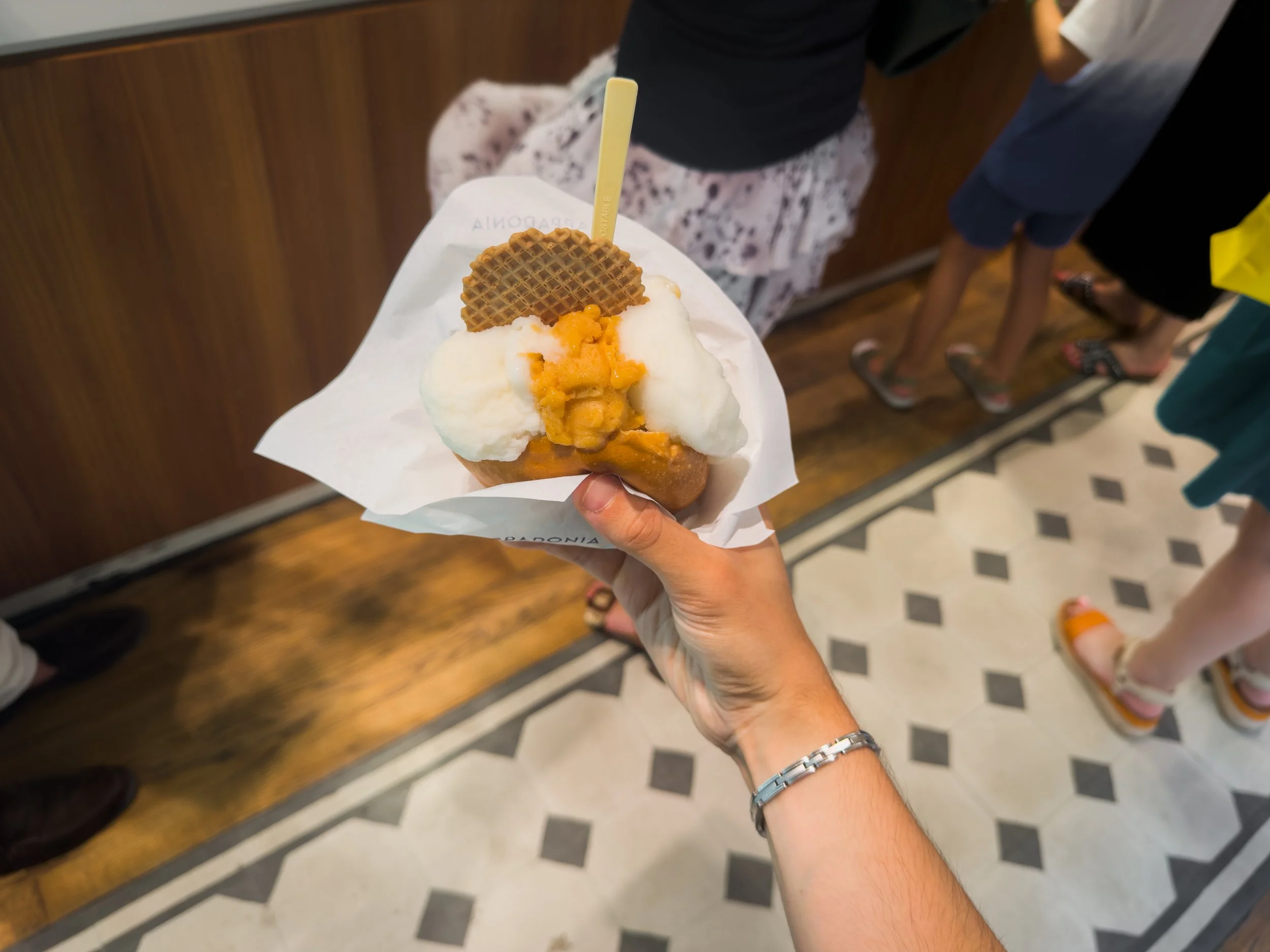
Sicilian fruit sorbets and brioche con gelato at Cappadonia’s Palermo shop.
Palermo, Sicily, Italy
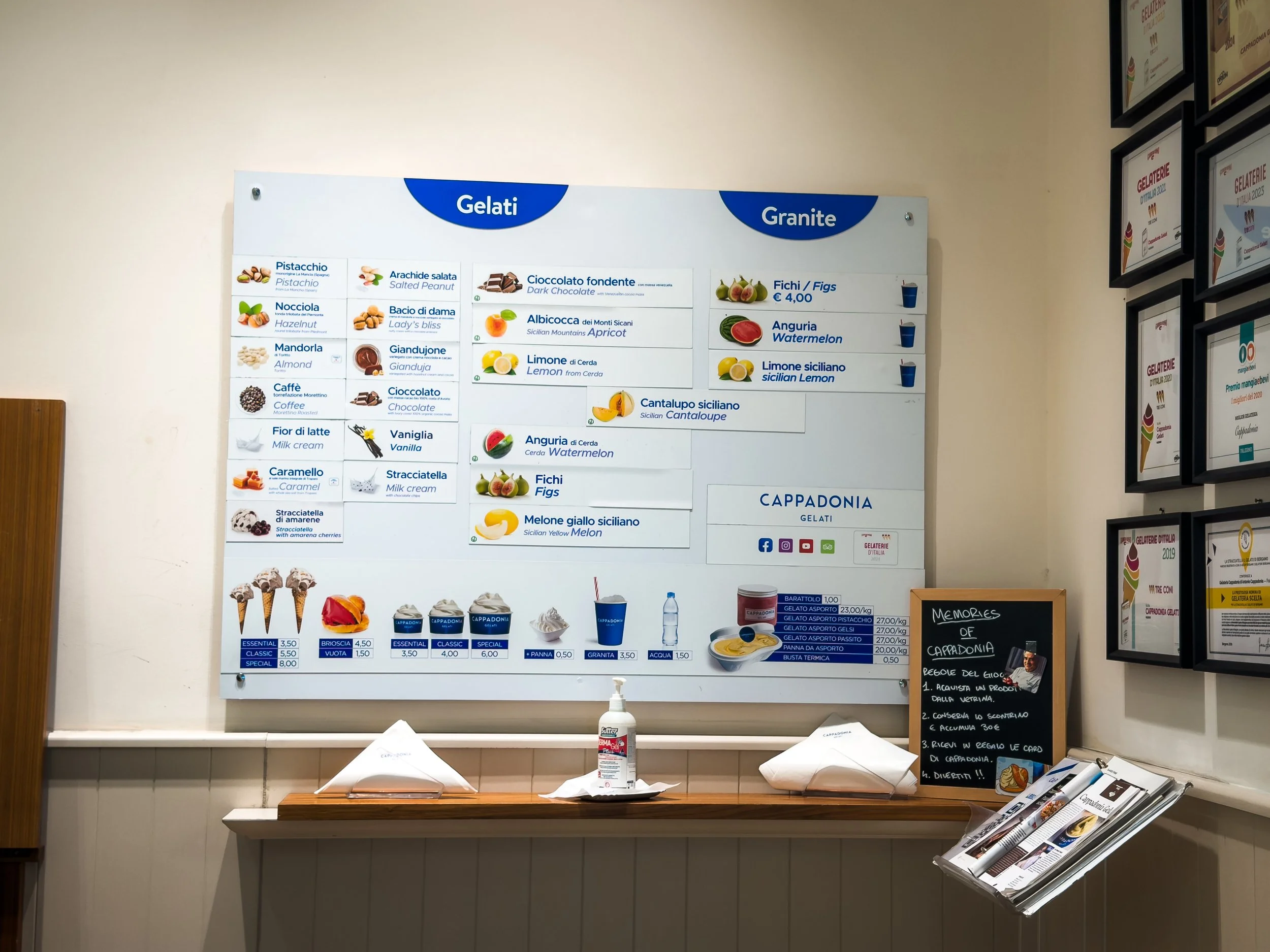
The flavour board at Cappadonia Gelati does not stop at apricot or lemon. During our visit, it listed Albicocca dei Monti Sicani and Limone di Cerda, placing the origin of the fruit alongside the flavour itself.
That attention to where ingredients come from is central to Cappadonia. Antonio Cappadonia began making gelato professionally in 1987 in Cerda, his home town in the Madonie, and describes his approach as gelato di territorio: gelato closely connected to its ingredients and their place of origin. Cappadonia emphasises seasonality, short supply chains and fruit selected according to ripeness, with long-standing relationships with growers across Sicily.
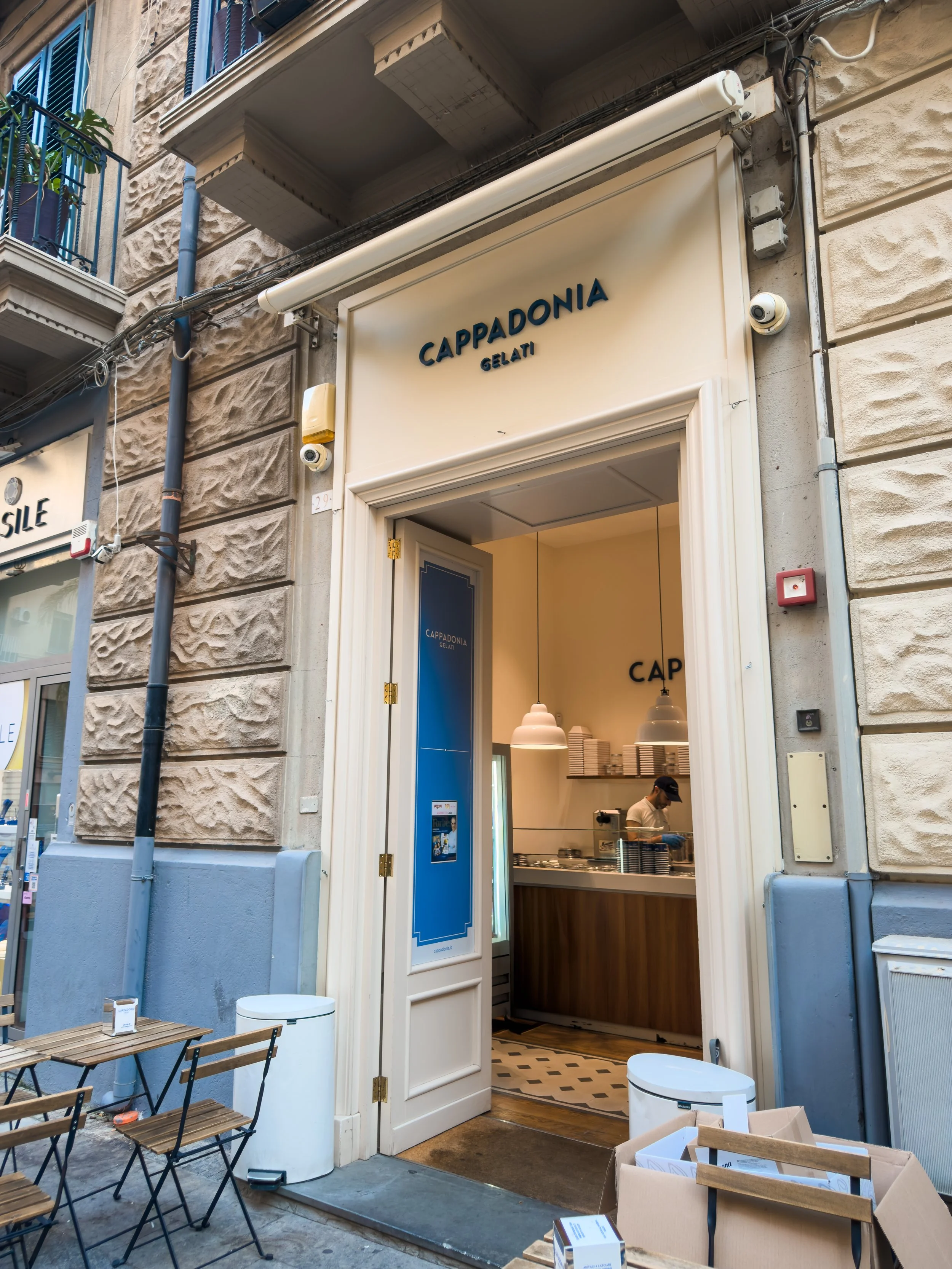
During our stay at Grand Hotel Wagner, we visited Cappadonia’s shop in Piazzetta Francesco Bagnasco, a short walk from the hotel. We had arranged a tasting with Mr Donato Didonna, but it quickly became much more than choosing a few flavours from the counter.
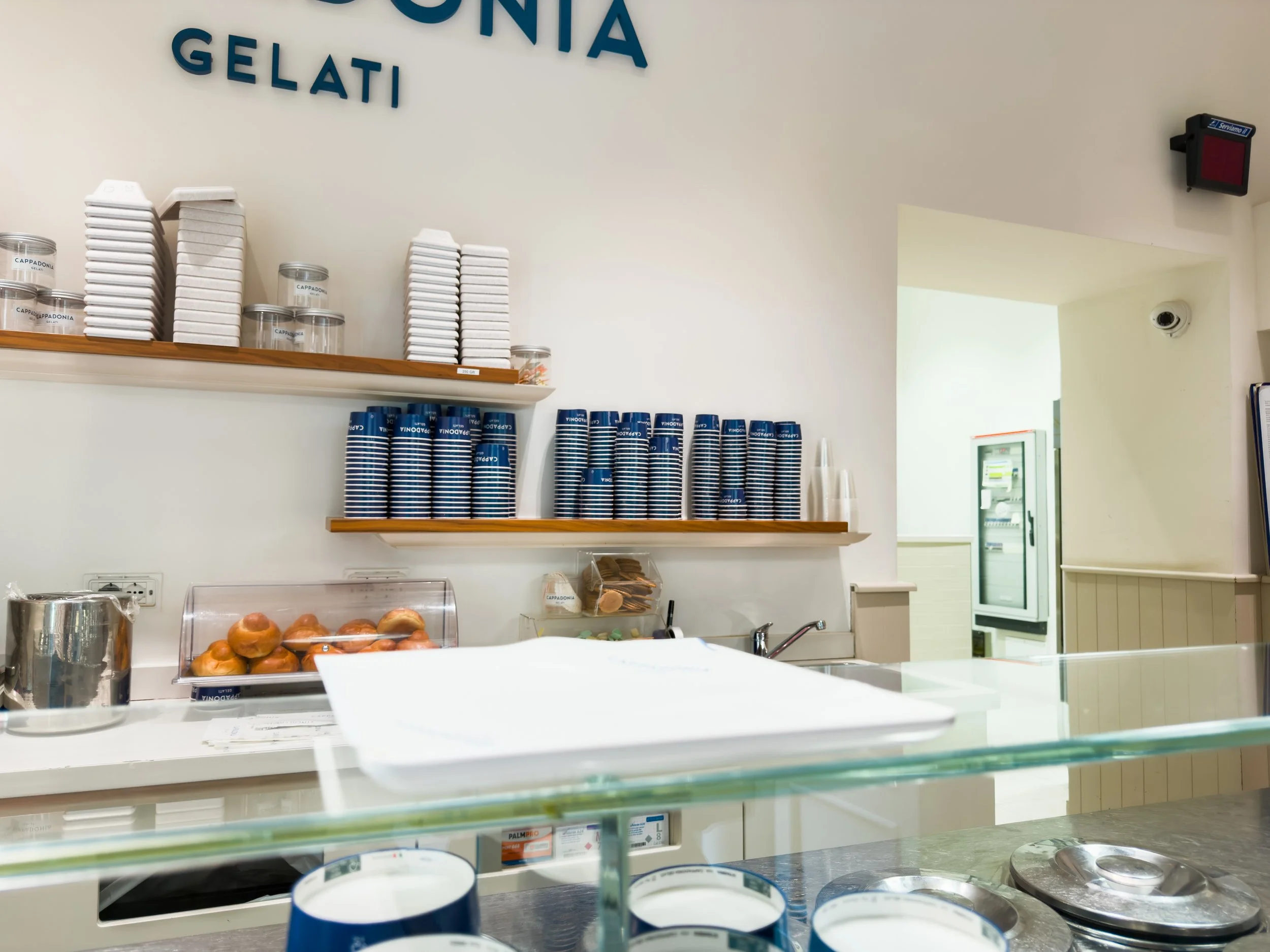
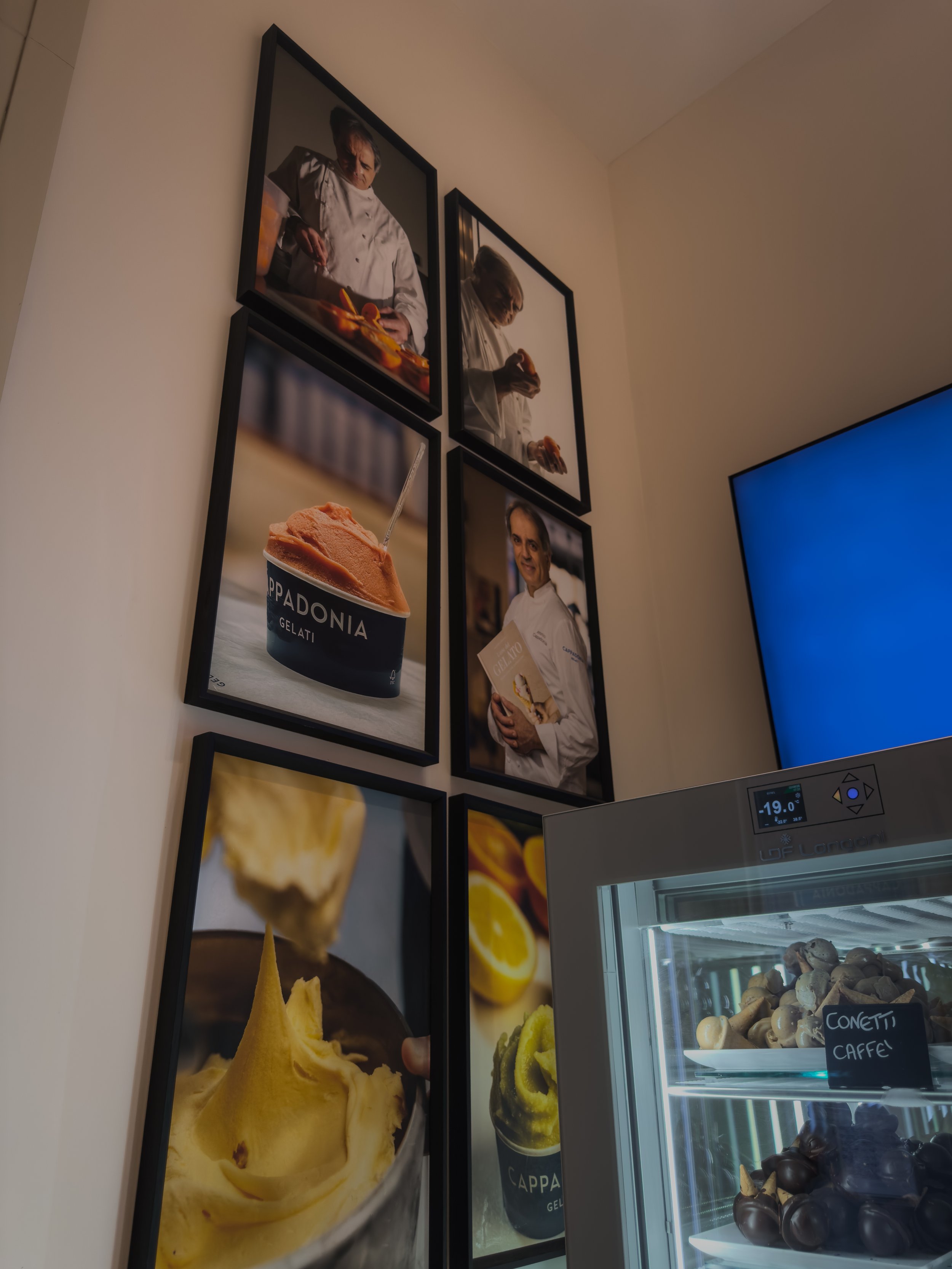
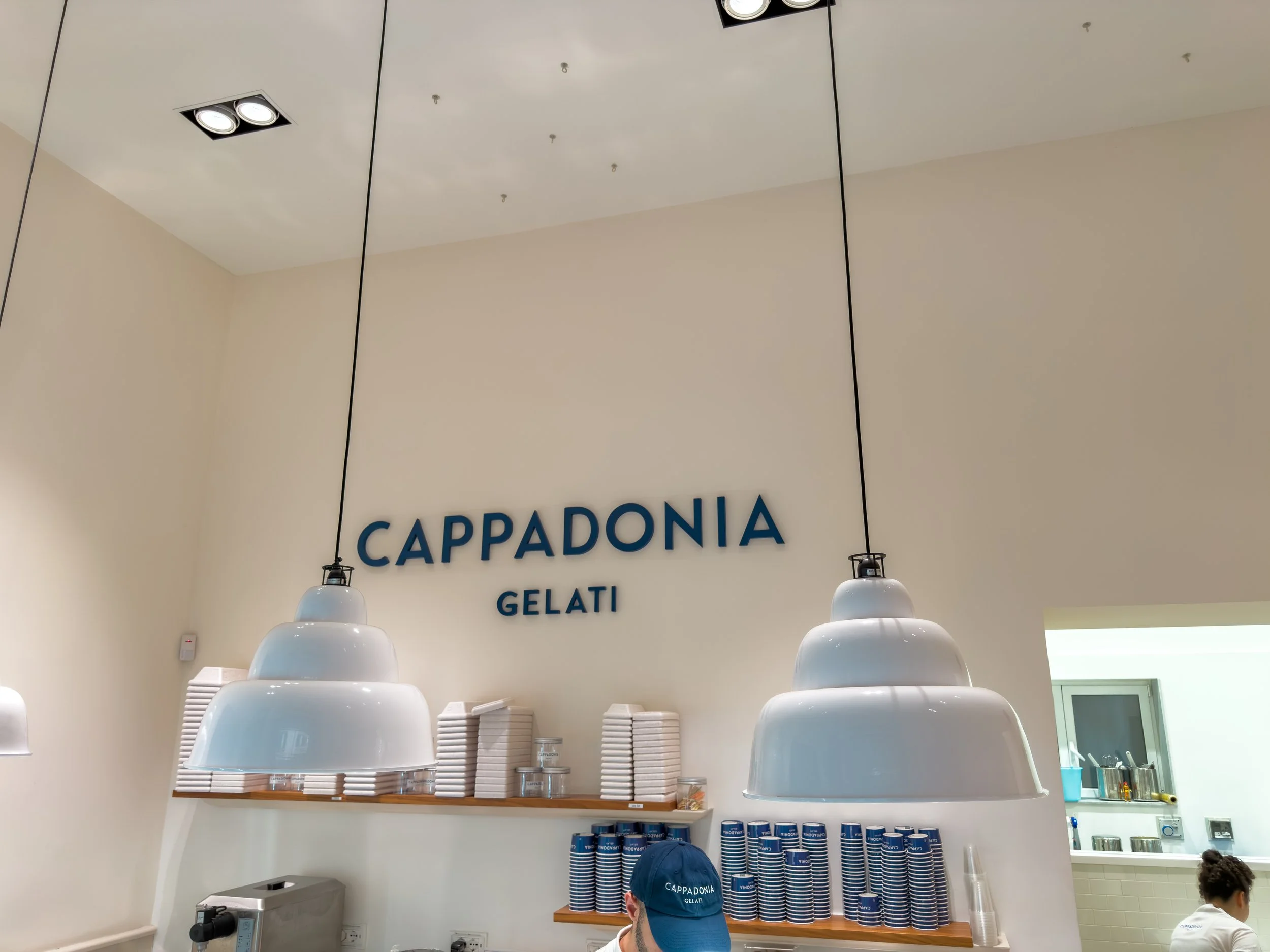
Inside Cappadonia’s Piazzetta Bagnasco shop, a short walk from Grand Hotel Wagner.
Cappadonia and Sicily
Donato spent time showing us what sits behind the gelato.
A film was playing on a screen inside the shop, following Antonio Cappadonia as he visited growers and talked about the fruit he uses. Donato stood with us as it played, explaining different parts of the process and the importance Cappadonia places on its ingredients.
In one scene, Cappadonia visits a grower producing a local white-fleshed peach. In another, he talks about prickly pears and the different varieties used in his sorbet. There are strawberries grown in the Monti Sicani at around 500 metres above sea level.
One point in the film stayed with me. Cappadonia explains that the colour of his prickly-pear sorbet can change depending on that year’s harvest and the balance of the different varieties used.
It is a small detail, but it says a lot about the approach. The fruit is not expected to look identical every year simply so the finished gelato can remain visually consistent.
Cappadonia’s own description of its work follows the same idea. He writes about meeting producers, understanding when fruit has reached the right stage of ripeness and respecting the natural growing cycle of individual plants and trees. He has used fruit from farmers in his region and from his own land, looking to producer consortiums when an ingredient cannot be sourced appropriately in Sicily.
Donato kept returning to the ingredients as he spoke to us. He wanted us to understand that the fruit mattered just as much as the finished gelato. By the time we started tasting, flavours such as Monti Sicani apricot and Cerda lemon already had a place attached to them.
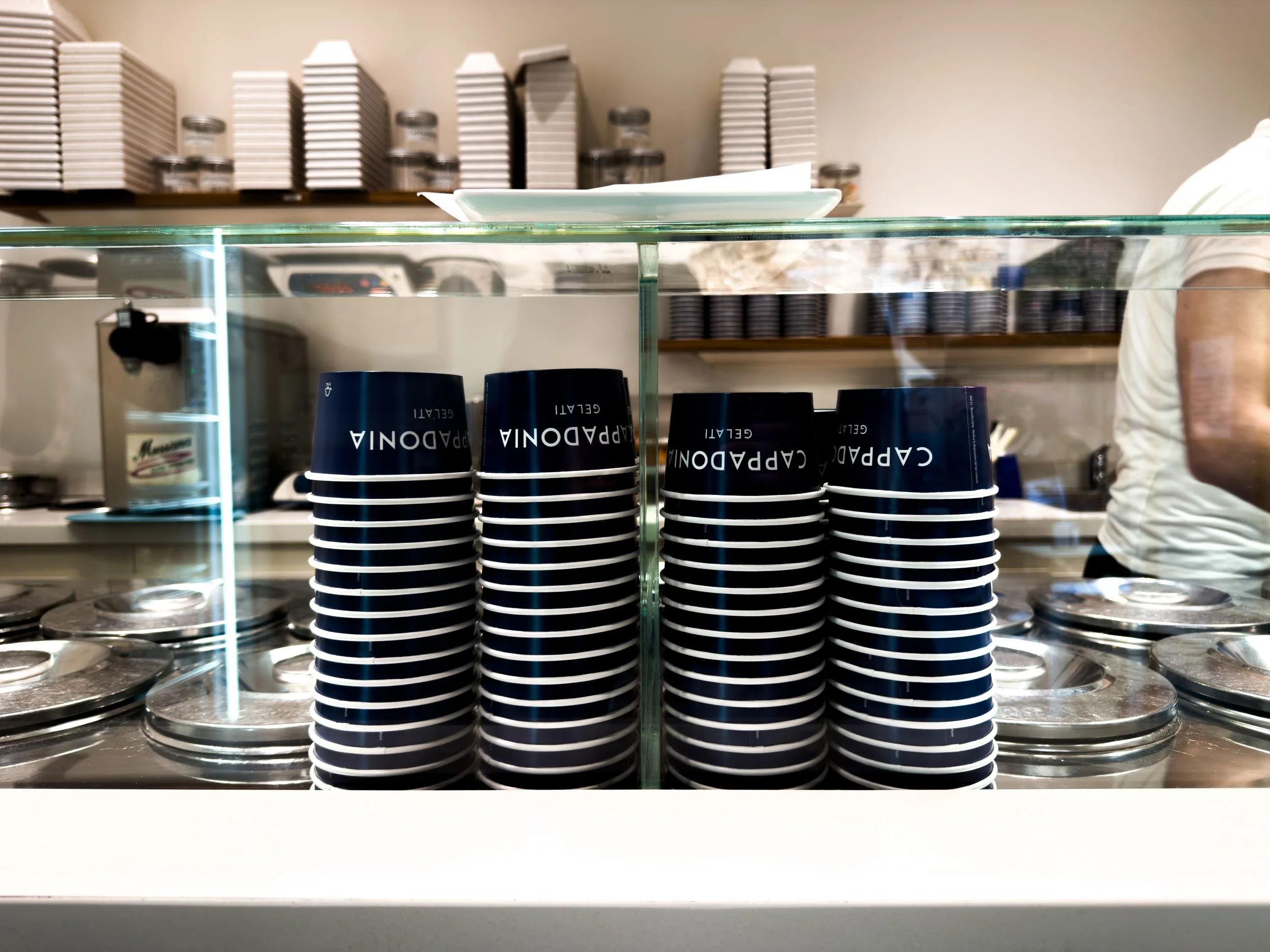
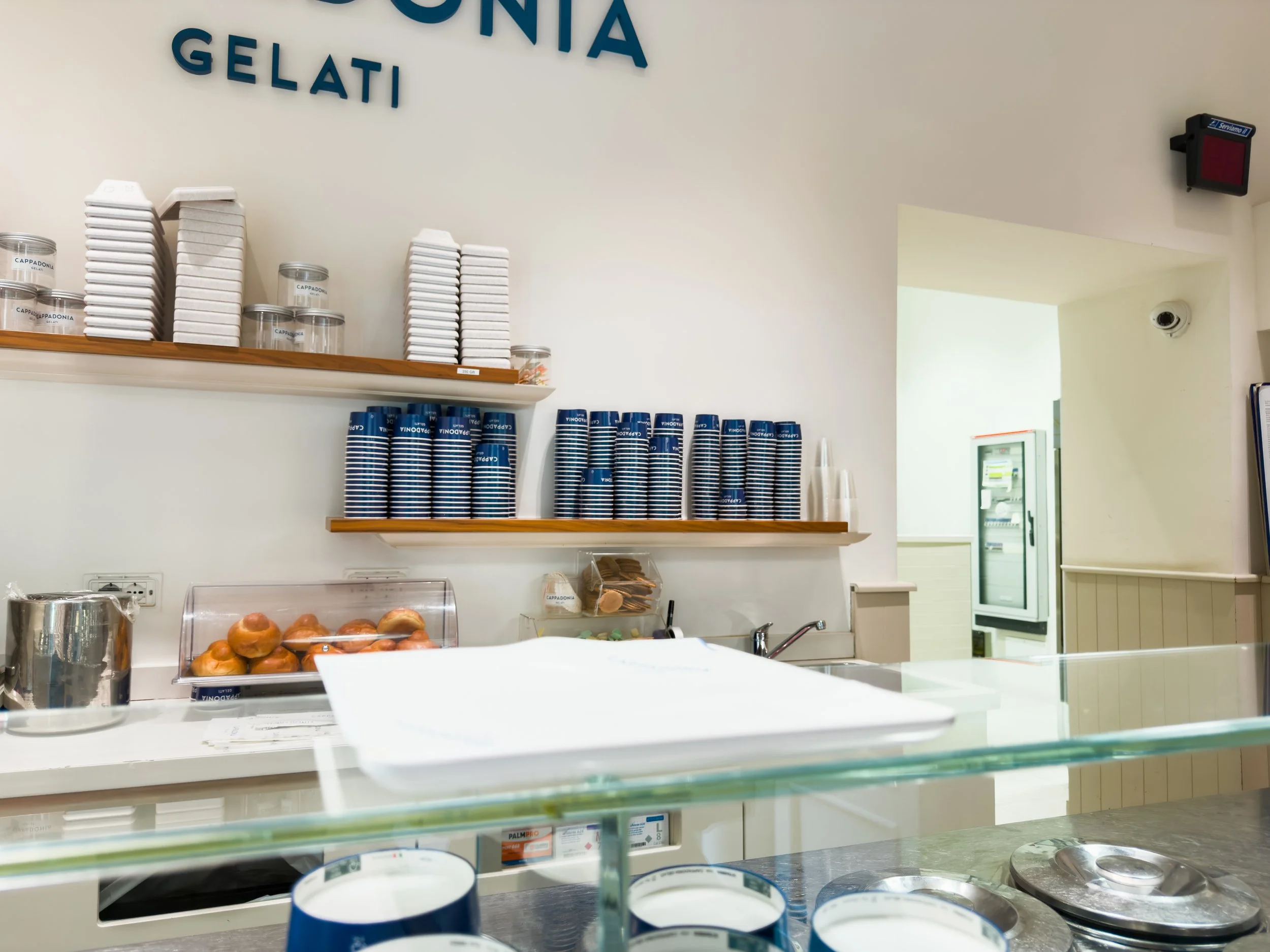
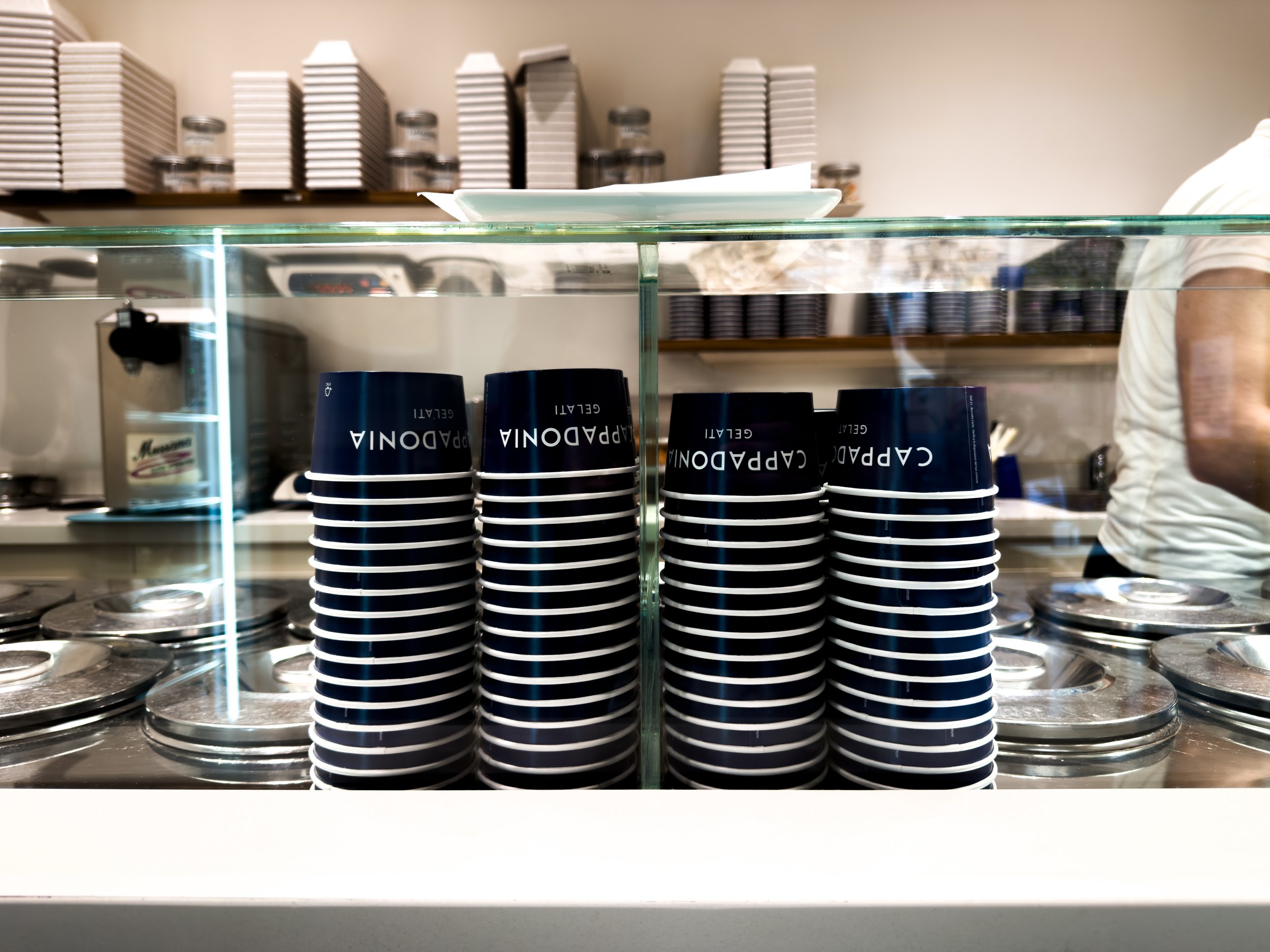
Cappadonia’s blue cups lined up behind the gelato counter.
Snow and salt
The story then moved from ingredients to an older Sicilian method of making granita.
Before mechanical refrigeration, granita was made by placing the fruit mixture inside a metal container and surrounding it with snow and salt. The combination created the low temperature needed to freeze the mixture as it was worked by hand.
The salt was not added to the granita itself. It was used with the snow around the inner vessel to make the environment cold enough for the mixture inside to thicken and freeze. Gambero Rosso traces this method to Sicily’s neviere, where mountain snow was collected and stored before refrigeration existed.
Antonio Cappadonia continues to demonstrate the technique rather than using it as the everyday production method for the gelato sold in Palermo.
Donato showed us photographs of Cappadonia working with the traditional vessels, including images from demonstrations outside Sicily.
In November 2024, Antonio Cappadonia took part in the Week of Italian Cuisine in the World at the Consulate General of Italy in Paris. He prepared lemon and pomegranate granitas in front of guests using the old technique with snow and salt.
Seeing those images in the shop made the history much easier to understand than simply reading that Sicilian granita has old roots.
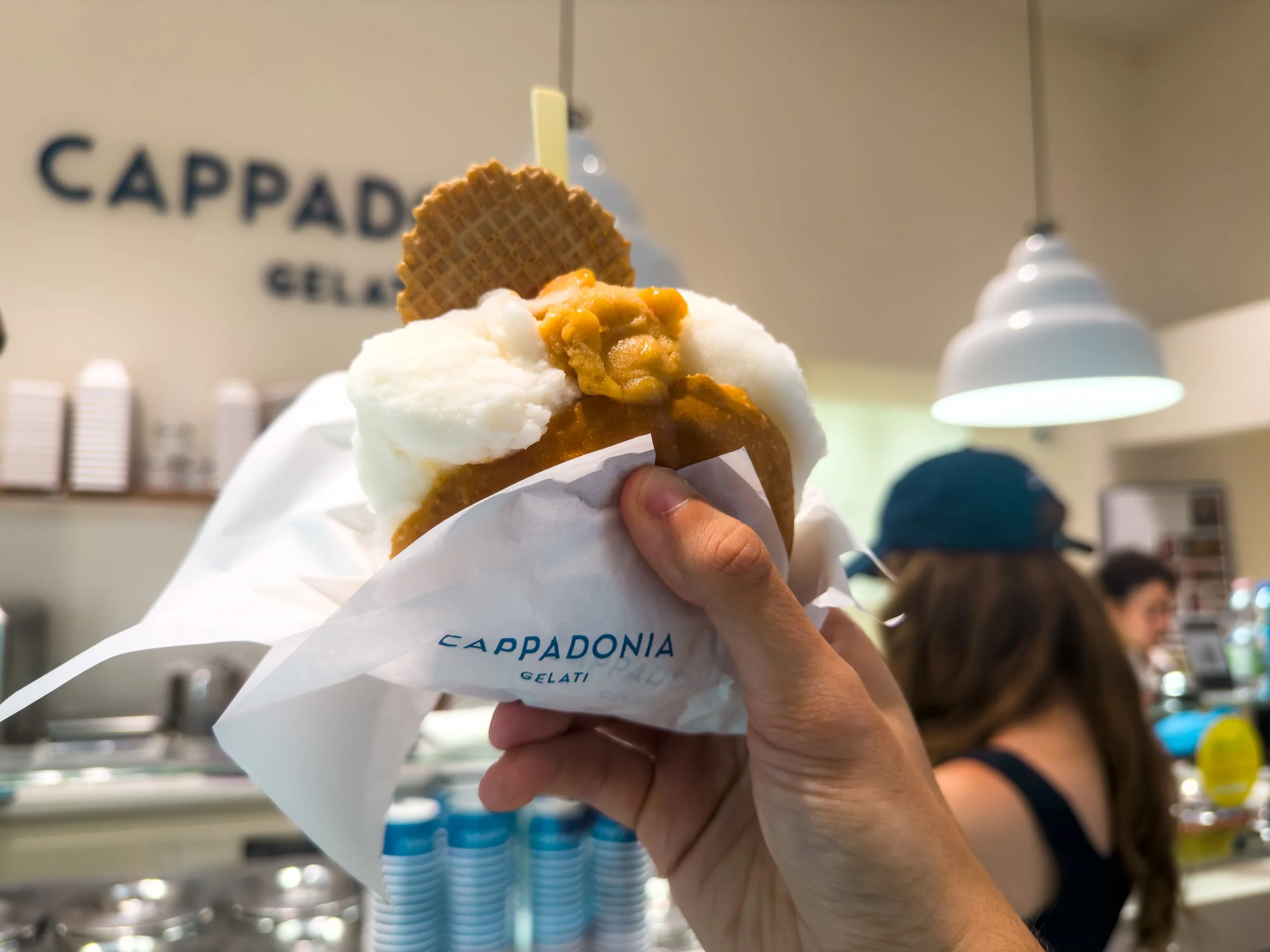
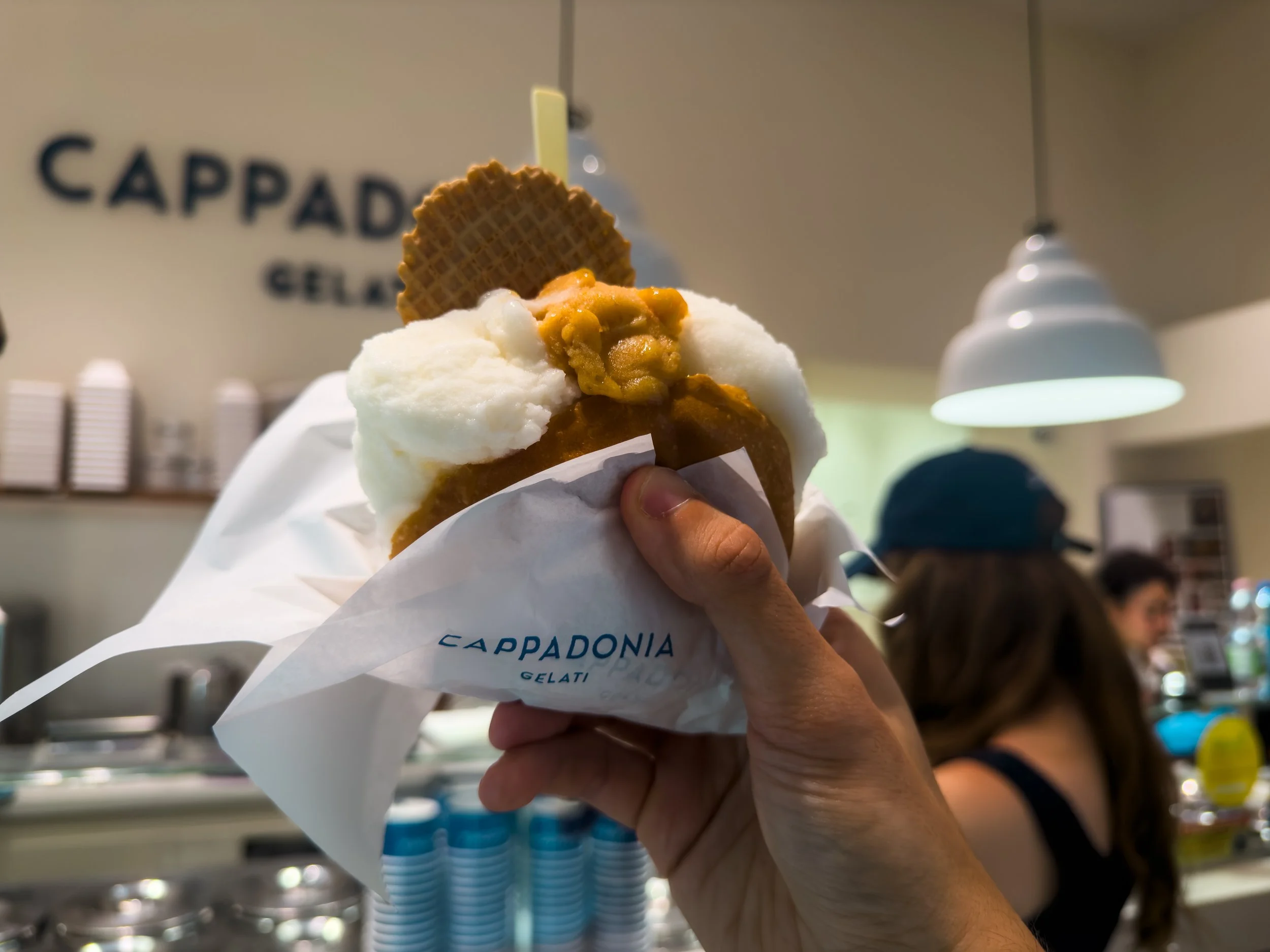
Brioche con gelato, the Sicilian way of turning gelato into something much more substantial.
Tasting the flavours
After the film and the discussion about sourcing, the tasting began.
And it was not a small tasting.
We were given a taste of every flavour available that day.
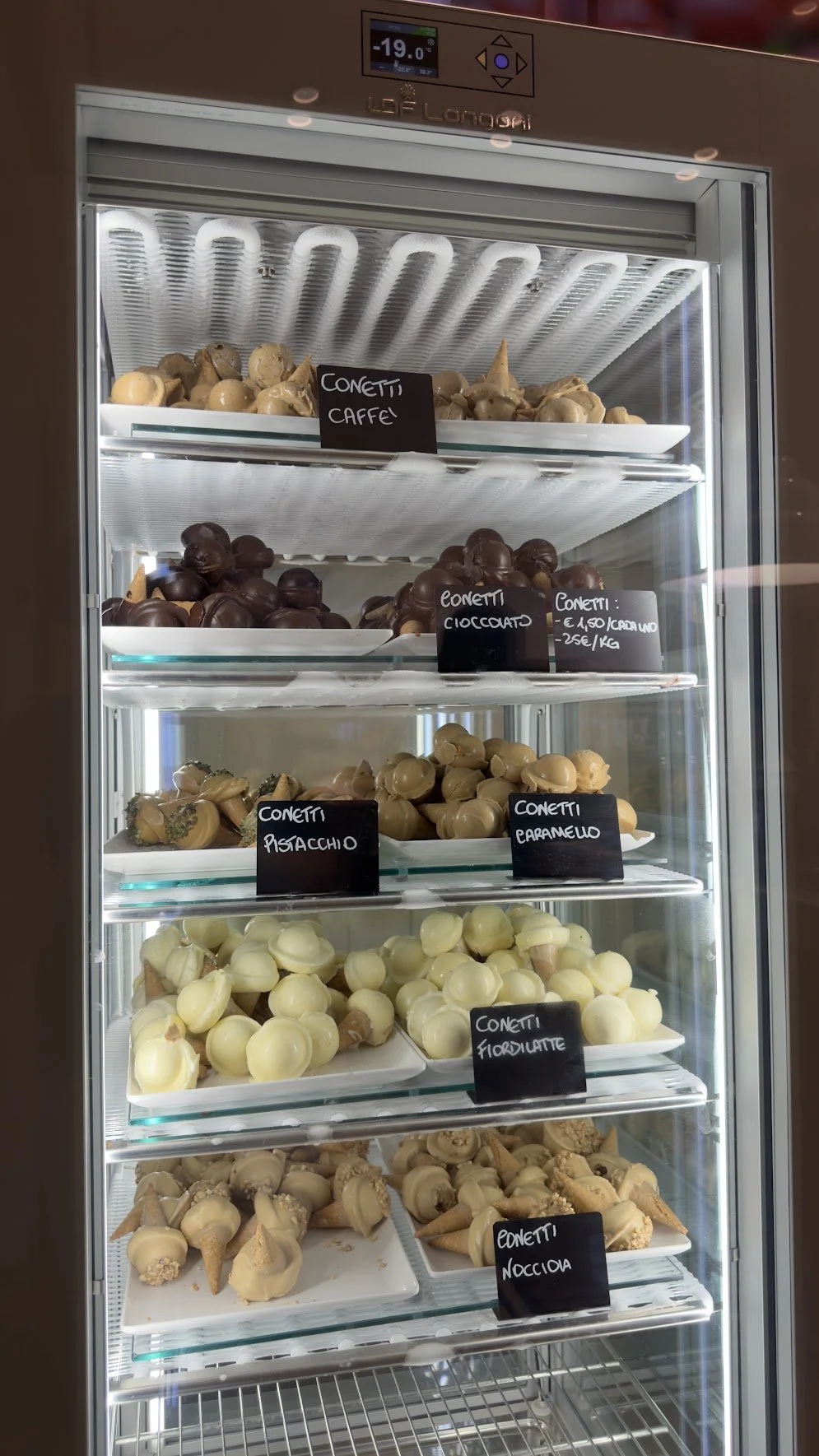
There were creams, chocolate and nut flavours alongside a large selection of fruit sorbets. Among them were Albicocca dei Monti Sicani, Limone di Cerda, Cantalupo siciliano, Anguria di Cerda, Fichi and Melone giallo siciliano. The shop also had a separate display of pastries, cakes and other sweets, but the gelato was what we had come for.
I enjoyed all of the flavours we tried, but the Sicilian Mountains apricot, lemon and melon were the ones I liked most.
After spending time listening to Donato talk about sourcing and watching Cappadonia visit growers on the screen, it felt fitting that my favourites were the fruit flavours. Those were also the ones I wanted to go back to.
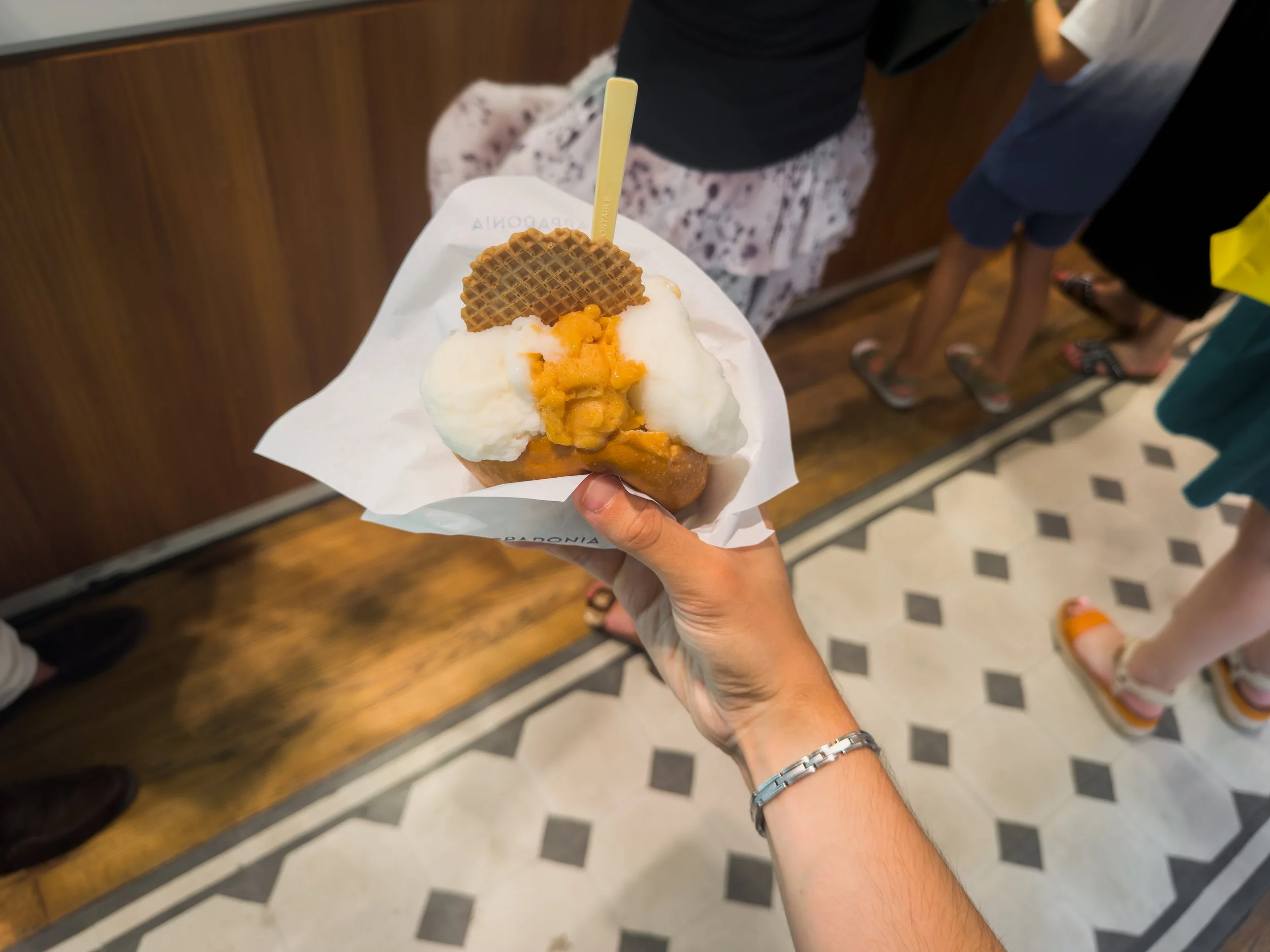
Three scoops inside brioche, served to us at the end of the tasting.
Brioche con gelato
The tasting ended with another Sicilian tradition: brioche con gelato.
A Sicilian brioche had been opened and filled with three scoops of gelato.
Donato explained that this is a common local way of eating gelato, and it is indeed a long-established Sicilian tradition. Gelato served inside the soft brioche col tuppo is particularly associated with Sicily, where brioche is also traditionally served alongside granita.
Until that afternoon, I associated brioche far more readily with breakfast than with three scoops of gelato.
It made immediate sense once it was in front of us.
After tasting the flavours individually, ending with the gelato inside brioche felt less like another part of the tasting and more like being shown how people here actually enjoy it.
We loved it.
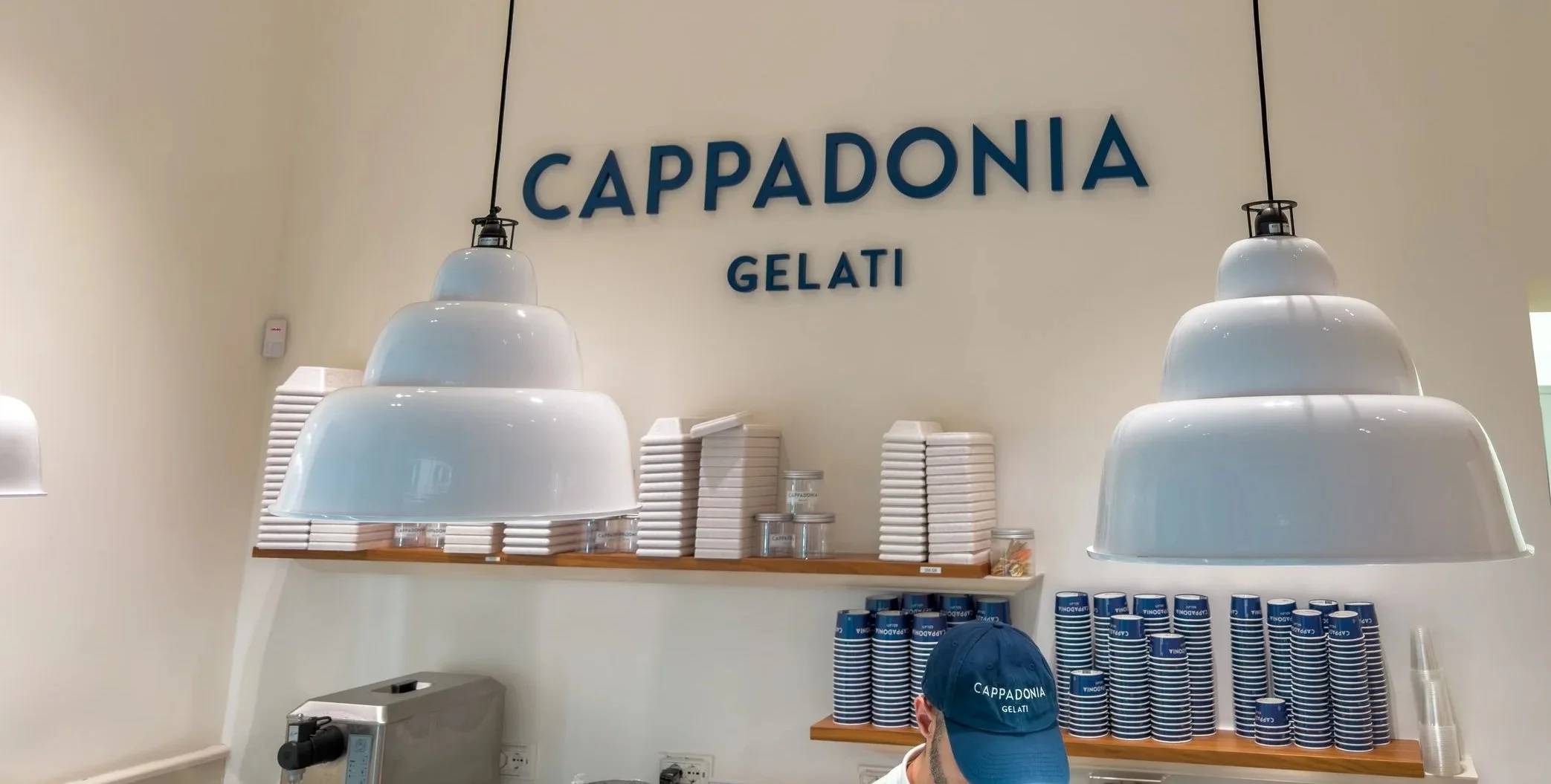
Cappadonia Gelati at Piazzetta Bagnasco, one of the brand’s three Palermo addresses.
Final thoughts
Cappadonia became one of those Palermo visits that gave us more than we expected when we walked through the door.
The gelato was the reason we went, but speaking with Donato gave the flavours context. We left understanding more about the fruit, the growers and why Antonio Cappadonia still takes the time to demonstrate a method involving snow and salt when modern refrigeration made it unnecessary long ago.
Most importantly, I know what I would order when I go back.
The apricot, lemon and melon would be my first choices, and next time I would put them straight into the brioche.
Plan your visit
Cappadonia Gelati
Piazzetta Francesco Bagnasco 29
90141 Palermo, Sicily, Italy
Phone
+39 392 5759351
Website
cappadonia.it
Instagram
@cappadonia_gelati
Experience
Seasonal Sicilian gelato and sorbets
Traditional gelateria in Palermo
Best for
Fruit sorbets
Brioche con gelato
A Palermo gelato stop near Grand Hotel Wagner
Hosted experience: Cappadonia Gelati hosted our tasting and provided the gelato and brioche. No fee was paid for this article, and all opinions are my own.
For restaurants to visit before a stop for gelato, see my Palermo dining guide.