Directly opposite the Vienna State Opera, Gerstner K. u. K. Hofzuckerbäcker occupies Palais Todesco, a historic Ringstrasse palace with richly decorated interiors and a confectionery tradition dating back to 1847.
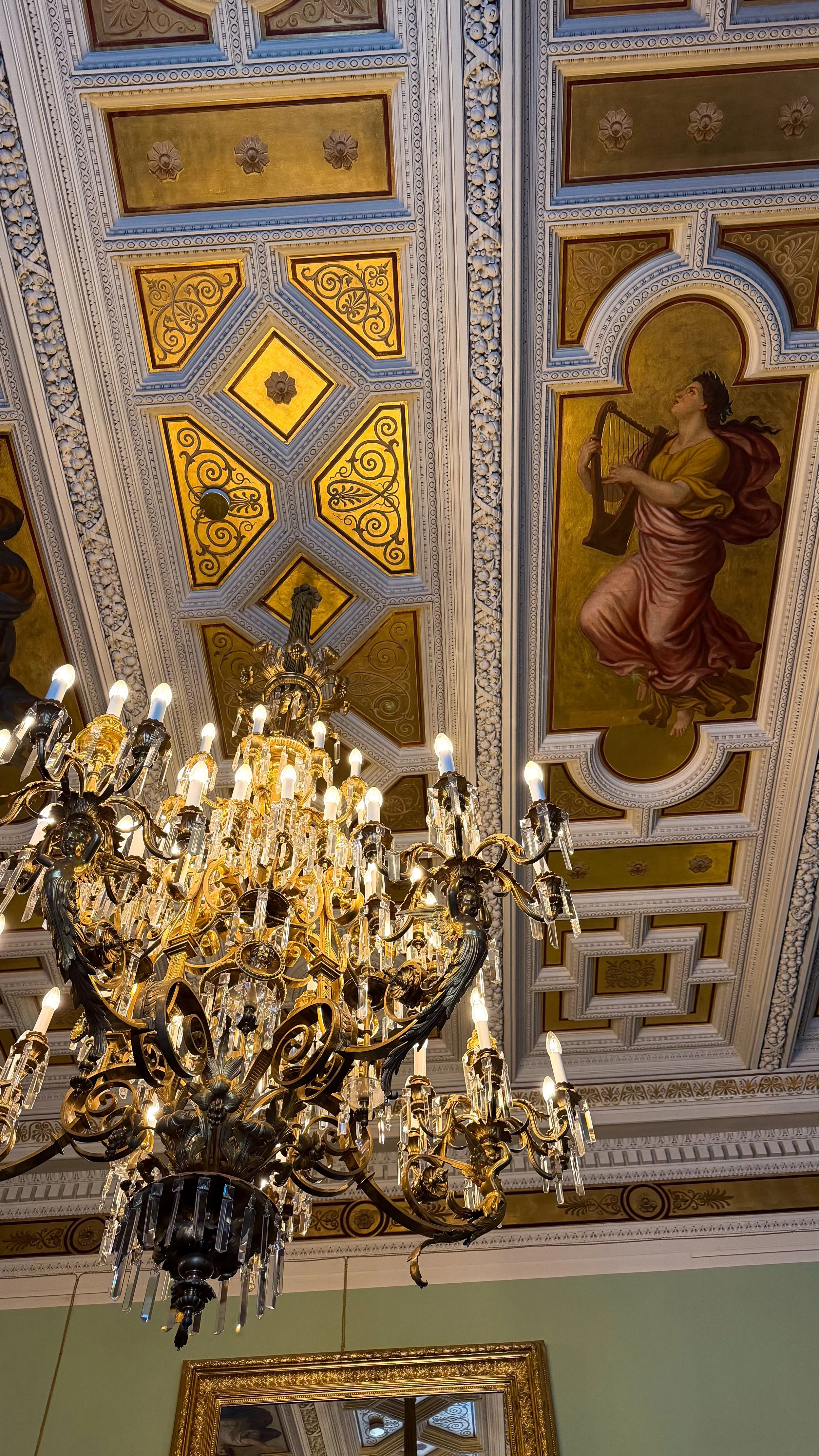
We visited Gerstner in November 2025 for coffee and cakes. The former reception rooms, with their painted ceilings, gilded decoration and crystal chandeliers, were among the most impressive interiors we saw during our time in Vienna.
The History of Gerstner
Gerstner was founded on 24 April 1847 by Anton and Barbara Gerstner, who opened their first confectionery at Stock-im-Eisen-Platz in central Vienna.
Anton Gerstner became known for his elaborate sugar decorations, particularly lifelike reproductions of flowers and fruit. His craftsmanship received international recognition at the Paris World Exhibition in 1867, where he was awarded gold and bronze medals.
In 1869, the confectionery began its longstanding relationship with the Imperial and Royal Court Opera Theatre, now the Vienna State Opera. Gerstner supplied refreshments for performances and subsequently became involved in some of Vienna's most prestigious cultural and social occasions.
The business received its Imperial and Royal Court Confectioner appointment in 1873, establishing its place among the suppliers to the Habsburg court.
One of its most famous customers was Empress Elisabeth of Austria, commonly known as Sisi, who was particularly fond of Gerstner's candied violets. The confectionery continues to produce these sweets today.
In 2014, Gerstner moved to its present address at Kärntner Straße 51, within Palais Todesco. The café-restaurant opened in 2016, bringing the historic confectionery into one of Vienna's remarkable surviving palace interiors.
Palais Todesco and Its Interiors
Palais Todesco was constructed between 1861 and 1864 for Eduard and Moritz von Todesco, members of Vienna's prominent banking and business community.
The building was designed by Christian Ludwig Förster, while the interiors were entrusted to Theophil Hansen, the Danish-born architect responsible for several important buildings along Vienna's Ringstrasse.
The palace was built as a private residence and a setting for the family's social gatherings. Its first major occasion took place on 5 May 1864, when Eduard von Todesco celebrated the wedding of his daughter Fanny to Henry de Worms. The richly decorated reception rooms were designed to accommodate precisely these kinds of events.
The former reception rooms are magnificent.
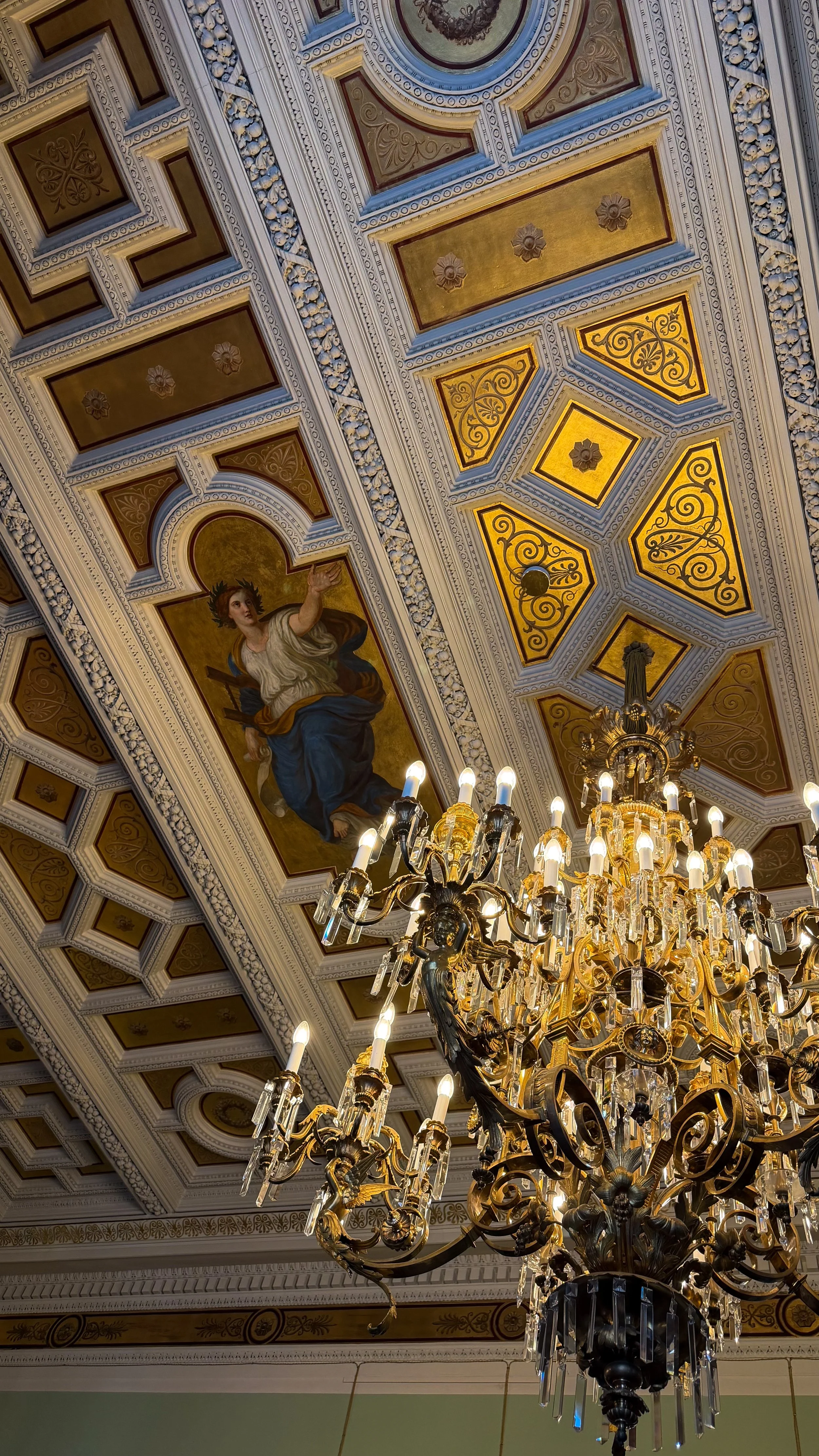
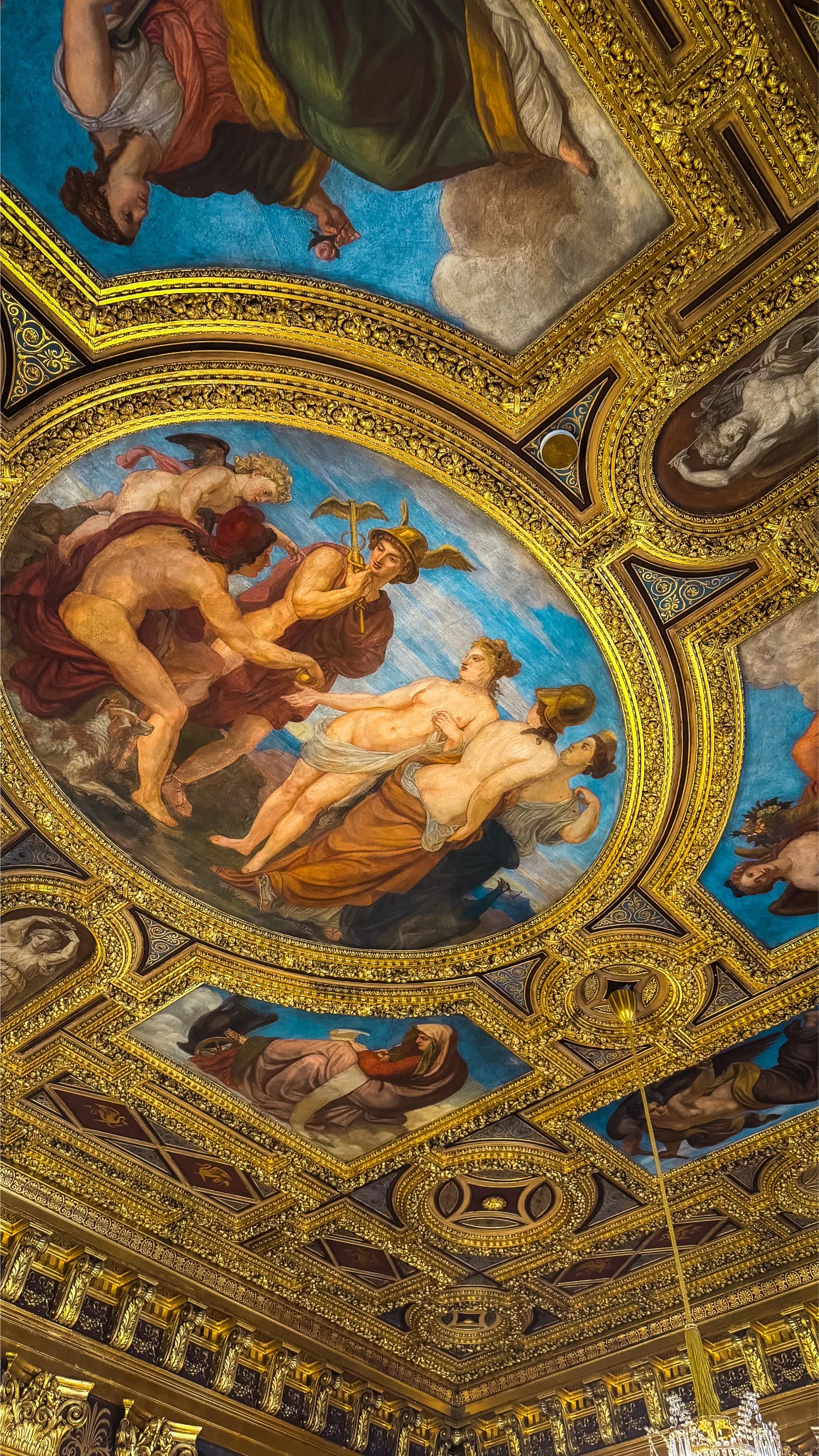
The ceilings feature elaborate geometric ornamentation, gilded mouldings and large paintings depicting scenes from classical mythology. Crystal chandeliers hang beneath the decorated panels, illuminating the architectural details.
One of the most impressive rooms is Salon Paris, named after the mythological figure depicted in its ceiling paintings. The central composition, The Judgement of Paris, was painted by Christian Griepenkerl, whose work was closely associated with the studio of Carl Rahl. Surrounding the central painting are allegorical figures representing classical mythology, set within elaborate gilded stucco.
The room is an excellent example of the importance placed on interior decoration during Vienna's Ringstrasse period. Hansen and the artists involved designed the architectural features, paintings and furnishings as parts of a complete interior.
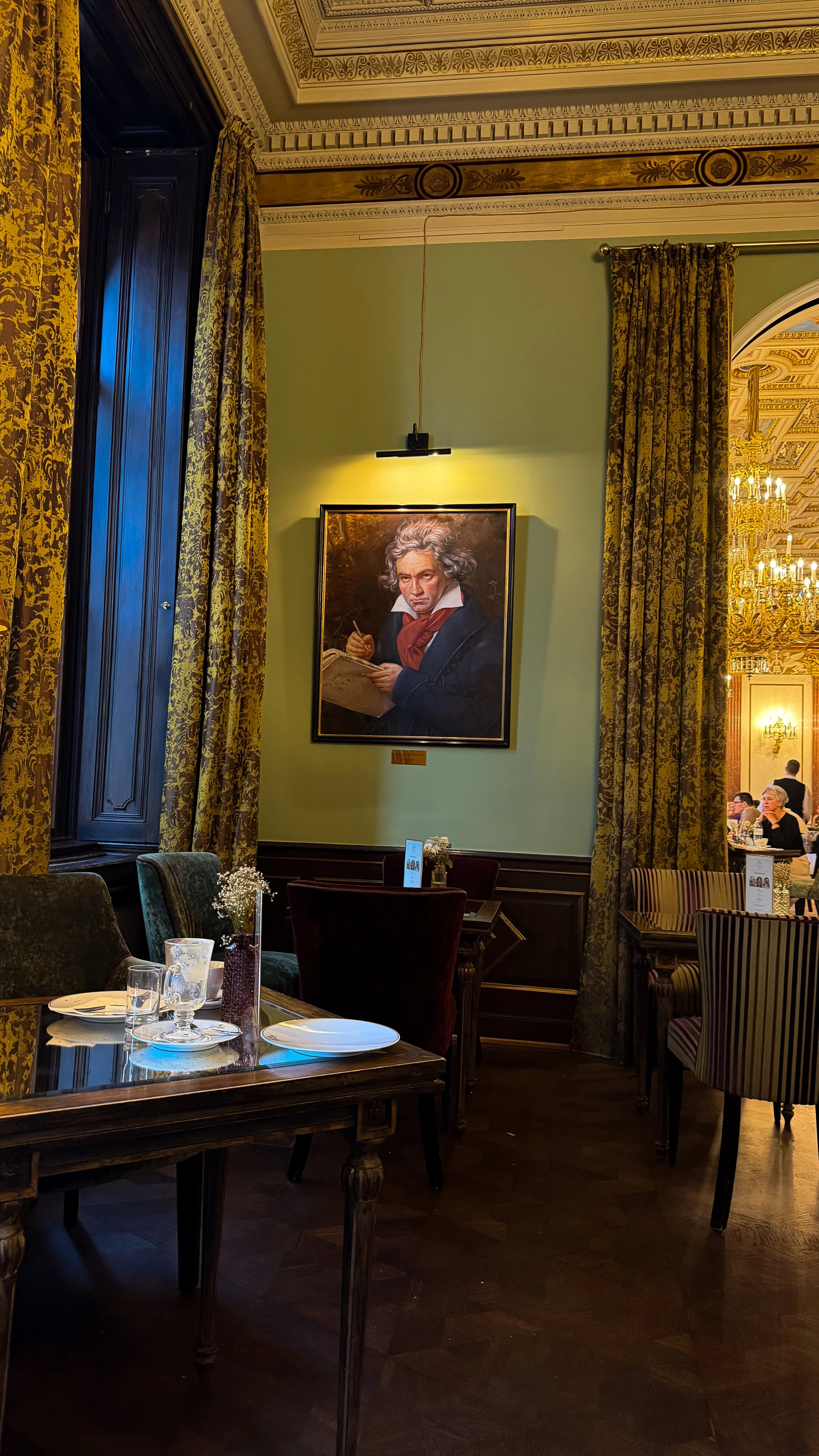
Elsewhere, the palace retains rooms with pale-green walls, heavy patterned curtains, upholstered chairs and framed paintings. Large mirrors and dark wooden furnishings complete the interiors.
I particularly liked how different the rooms felt. Some are dominated by richly painted ceilings and chandeliers, while others have a more intimate arrangement of tables and seating.
Coffee and Cakes at Gerstner
Gerstner occupies three floors of Palais Todesco. The ground floor houses the confectionery shop, where cakes, pastries and chocolates are available to take away. Upstairs, the first-floor café-bar offers views of the Vienna State Opera, while the second-floor café-restaurant occupies the palace's richly decorated former reception rooms.
For anyone visiting specifically to experience the historic interiors, I would recommend reserving a table upstairs.
Gerstner's selection includes traditional Viennese cakes alongside the confectionery's own creations. Among its best-known specialities are the Gerstner Torte, developed following Anton Gerstner's success at the Paris World Exhibition in 1867, and the Haustorte, made with Esterházy layers, chocolate cream and chocolate shavings.
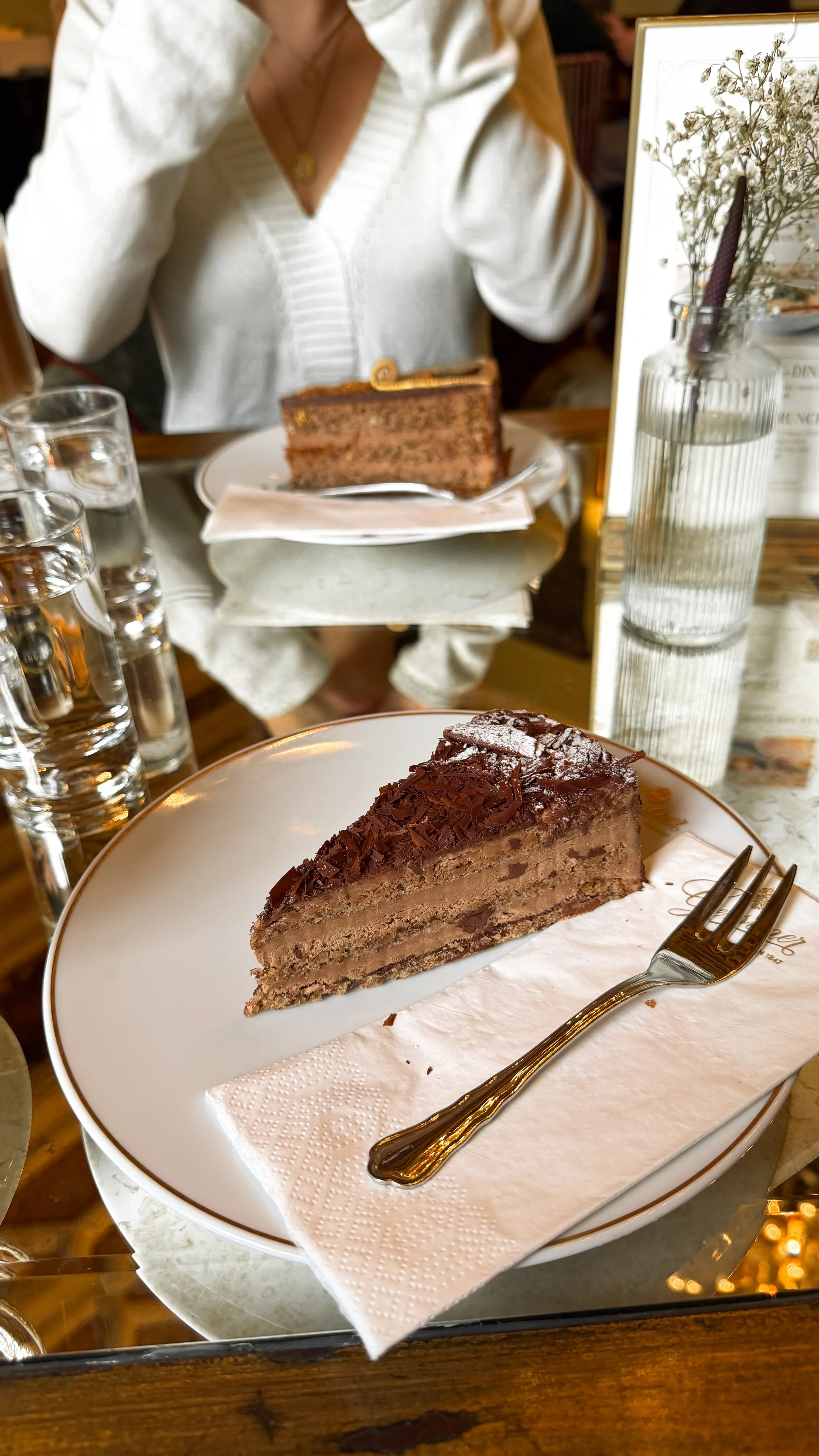
During our visit, I asked our waiter which cake he would recommend. He suggested the Haustorte, telling me it was his personal favourite, so I decided to follow his recommendation.
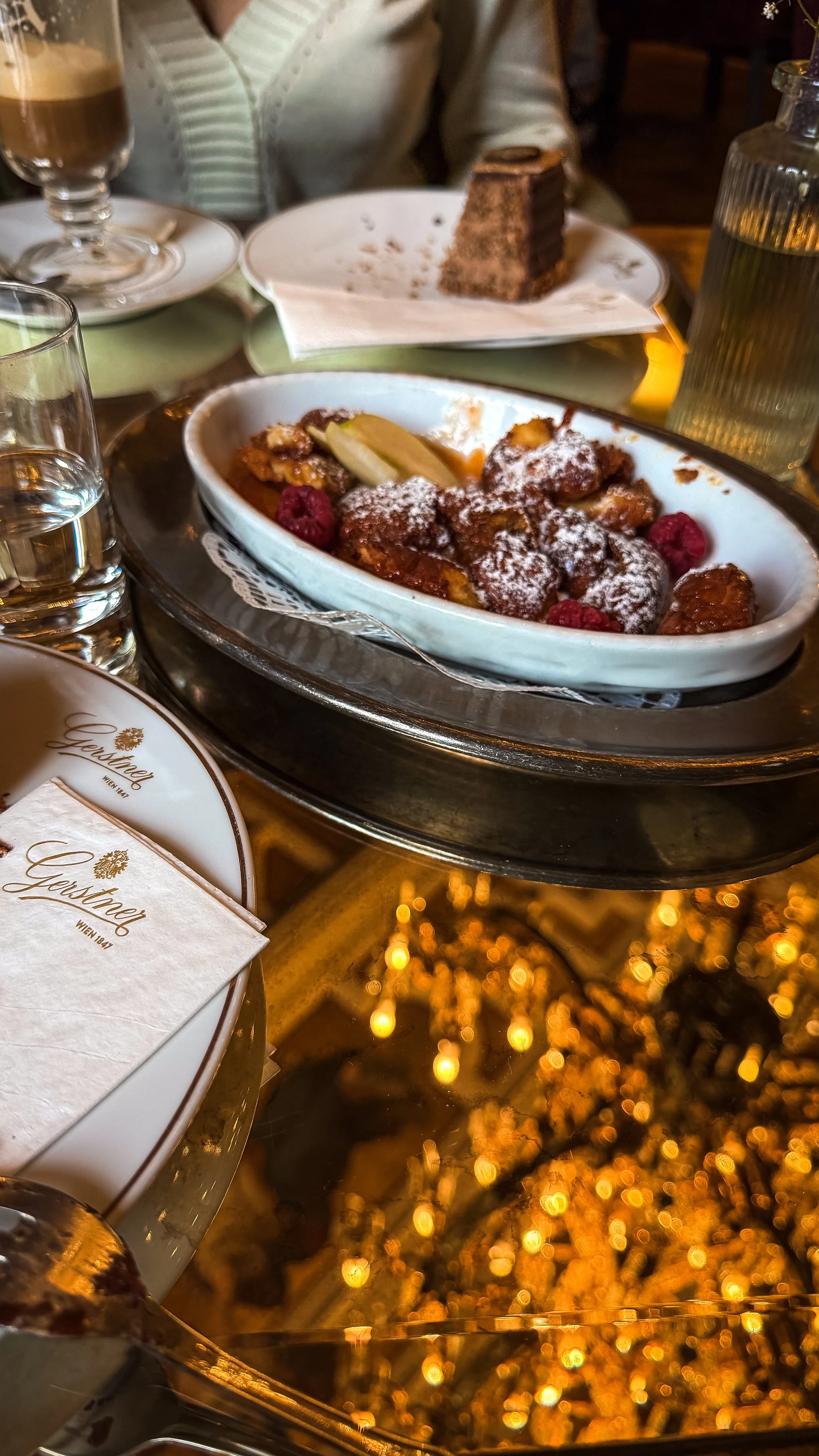
The cake had several layers of chocolate cream and a generous covering of chocolate shavings. We also ordered a second chocolate torte, with darker layers and a small decorative finish. Both were presented on Gerstner's traditional white porcelain plates, decorated with the confectionery's distinctive script.
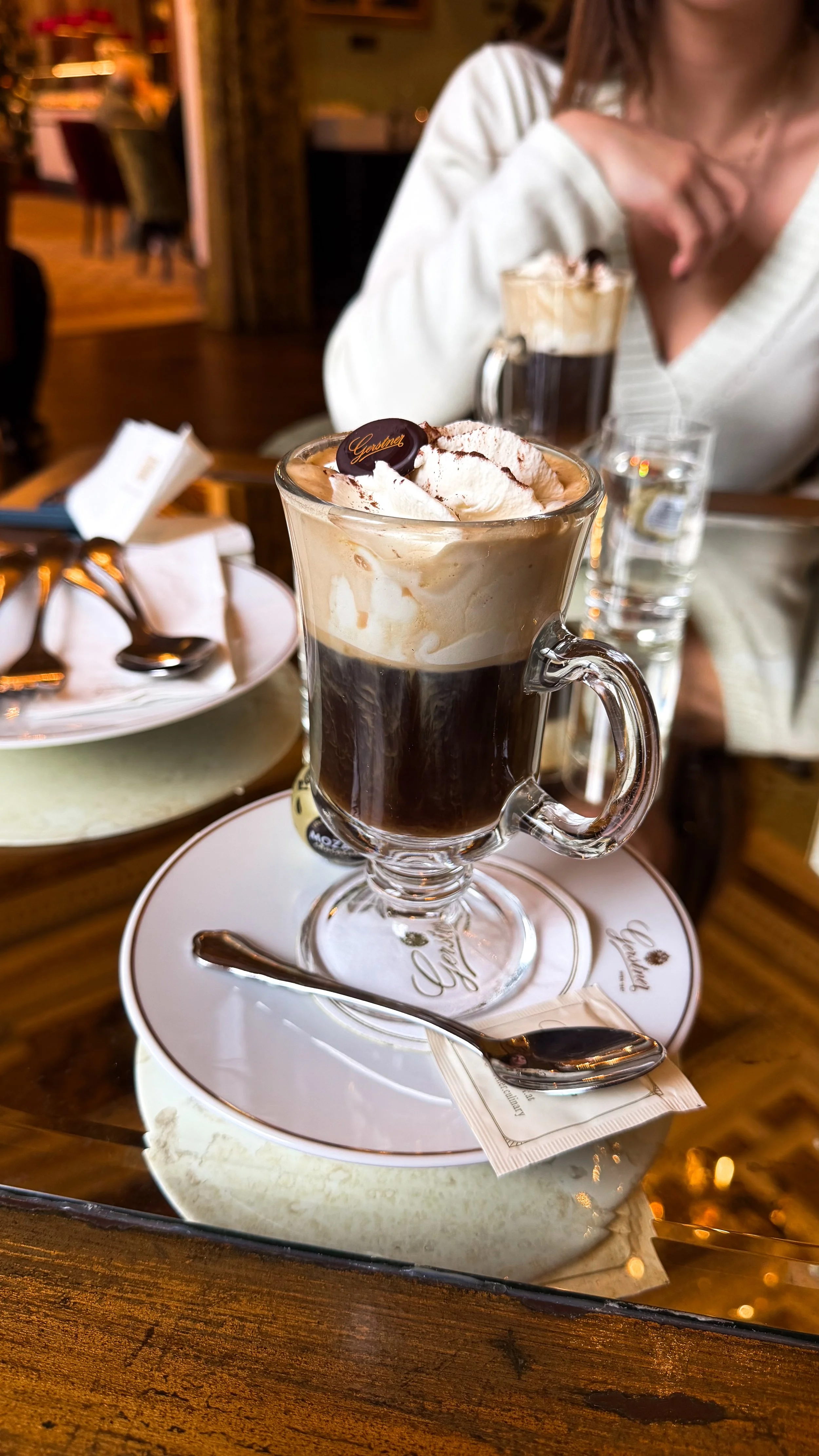
For coffee, I ordered the Barbara Gerstner Kaffee, one of the café's house specialities. Prepared with double espresso, Mozart Chocolate Cream liqueur and whipped cream, it arrived in a tall glass with a generous topping of cream and a small chocolate decoration bearing the Gerstner name.
I particularly liked the presentation, and the addition of Mozart Chocolate Cream made it an interesting alternative to the more familiar Viennese coffees.
We also ordered Kaiserschmarrn, the traditional Austrian dessert of torn, caramelised pancake. It arrived in an oval dish, dusted with icing sugar and accompanied by fruit.
The combination of coffee, traditional cakes and the historic surroundings made our visit particularly enjoyable. I also appreciated our waiter's personal recommendation, which introduced me to the Haustorte, a cake I might not otherwise have chosen.
Final Thoughts
Gerstner at Palais Todesco is an address I would happily return to on another visit to Vienna. I particularly enjoyed the historic dining rooms, and our waiter's personal cake recommendation made choosing from the extensive selection much easier.
The architecture is the main reason I would recommend this location over a quick stop at a conventional café. If you have time to sit upstairs, enjoy a coffee and take in the decorated rooms, Gerstner deserves a place on your Vienna itinerary.
Address: Kärntner Straße 51, 1010 Vienna, Austria
Official Website: gerstner.at
Visited November 2025.